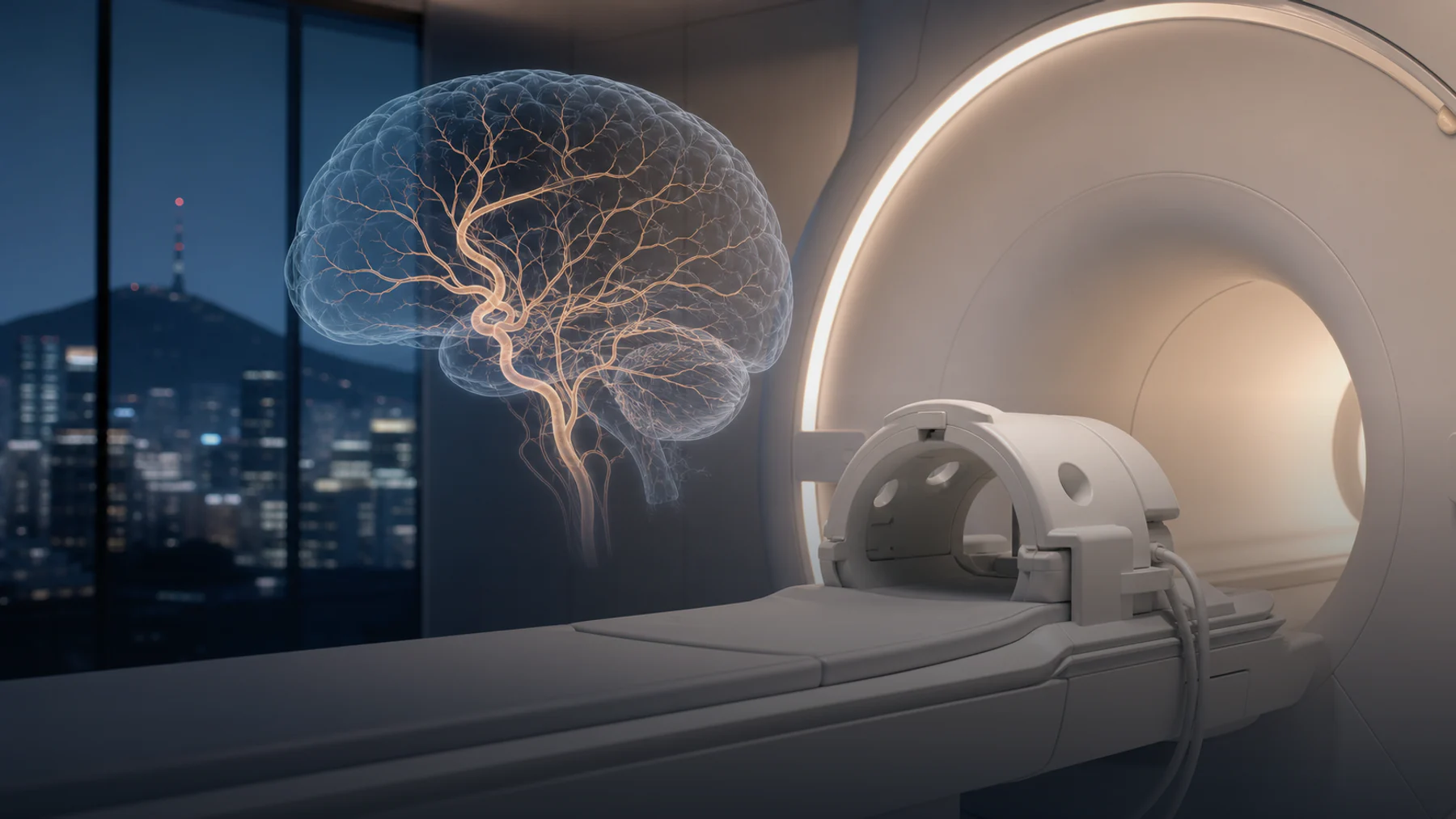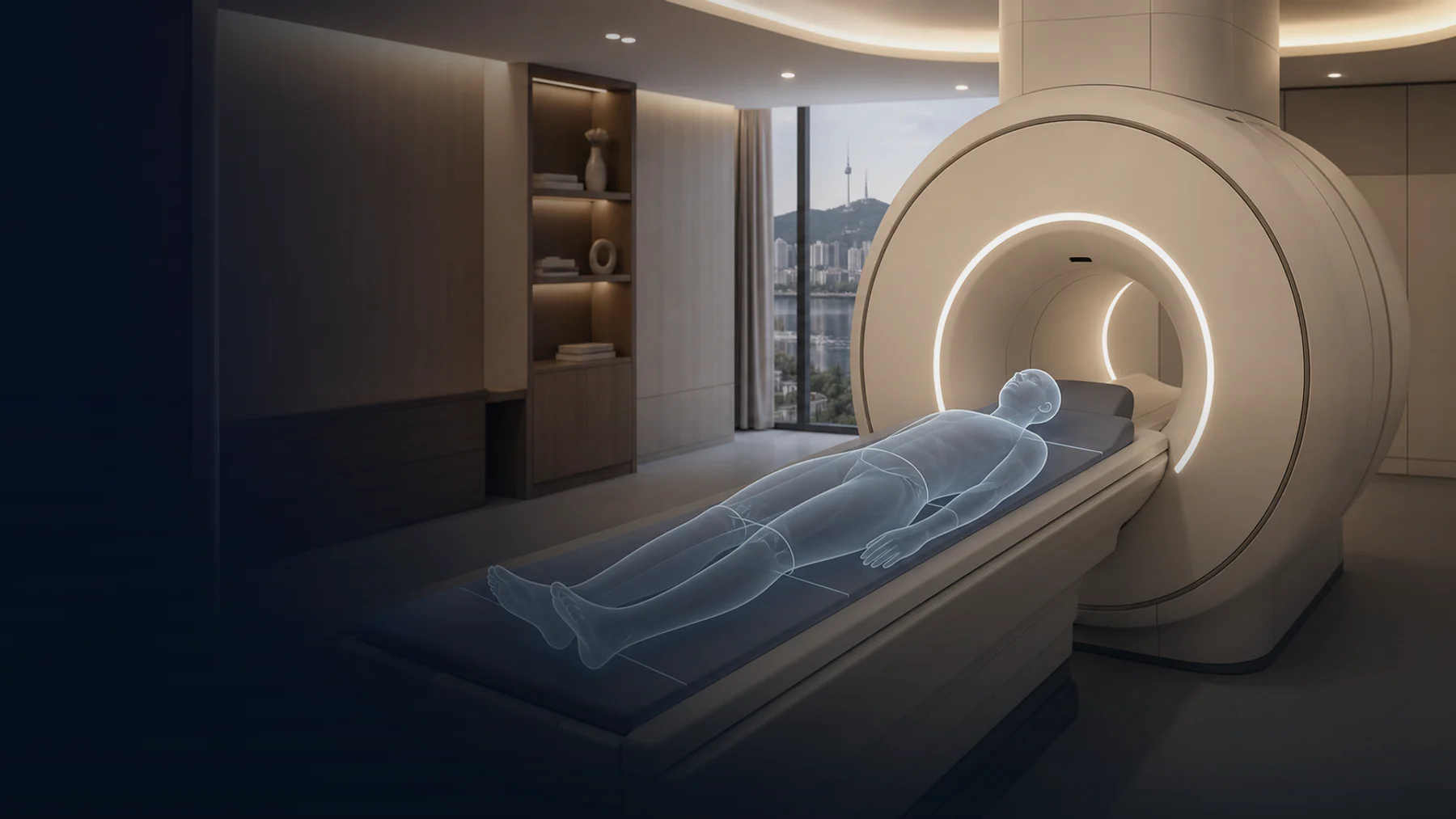
A whole-body MRI is a single scan covering the head, neck, chest, abdomen and pelvis without ionising radiation. It takes 45–70 minutes and is used to screen for tumours, aneurysms and structural disease in people without symptoms.
One continuous appointment, five body regions.
MRI uses magnetic fields, not ionising radiation.
MediOne's published price for one MRI region (brain, cerebrovascular, or one of cervical/thoracic/lumbar spine). A whole-spine sagittal MRI is ₩650,000 and each extra sequence is ₩100,000.
KMI Global's Whole Body program. No partner centre publishes a single whole-body MRI protocol, so a multi-region scan is assembled from regions or taken inside a top-tier program.
One week is the earliest an imaging slot can be held, and there is no referral step before it. Meridiko's own operating figure.
English report in your hands, which is Meridiko's own delivery target rather than a centre's published figure. You get a consultation on preliminary findings on the day of the screening, before you leave.
Programme contents and prices from each partner centre's own foreigner-facing published list, read 2026-08-05: KMI Global, Hanaro Medical Foundation's English site and MediOne's English site. Standalone per-test prices are MediOne's 비급여 (non-covered) posting, the itemised list 의료법 제45조 requires a clinic to publish, read the same day. Report turnaround is Meridiko's own delivery target rather than a centre's published figure, and is labelled as ours where it appears (https://global.kmi.or.kr/examination/foreigner_examination; https://en-mobile.hanaromf.com/program/prog01/prog01_01.jsp; https://en.medionemedicalcenter.com/m1; https://medionemedicalcenter.com/115), measured 2026-08-05.
Tumours, aneurysms and structural disease across the head, neck, chest, abdomen and pelvis, in people without symptoms.
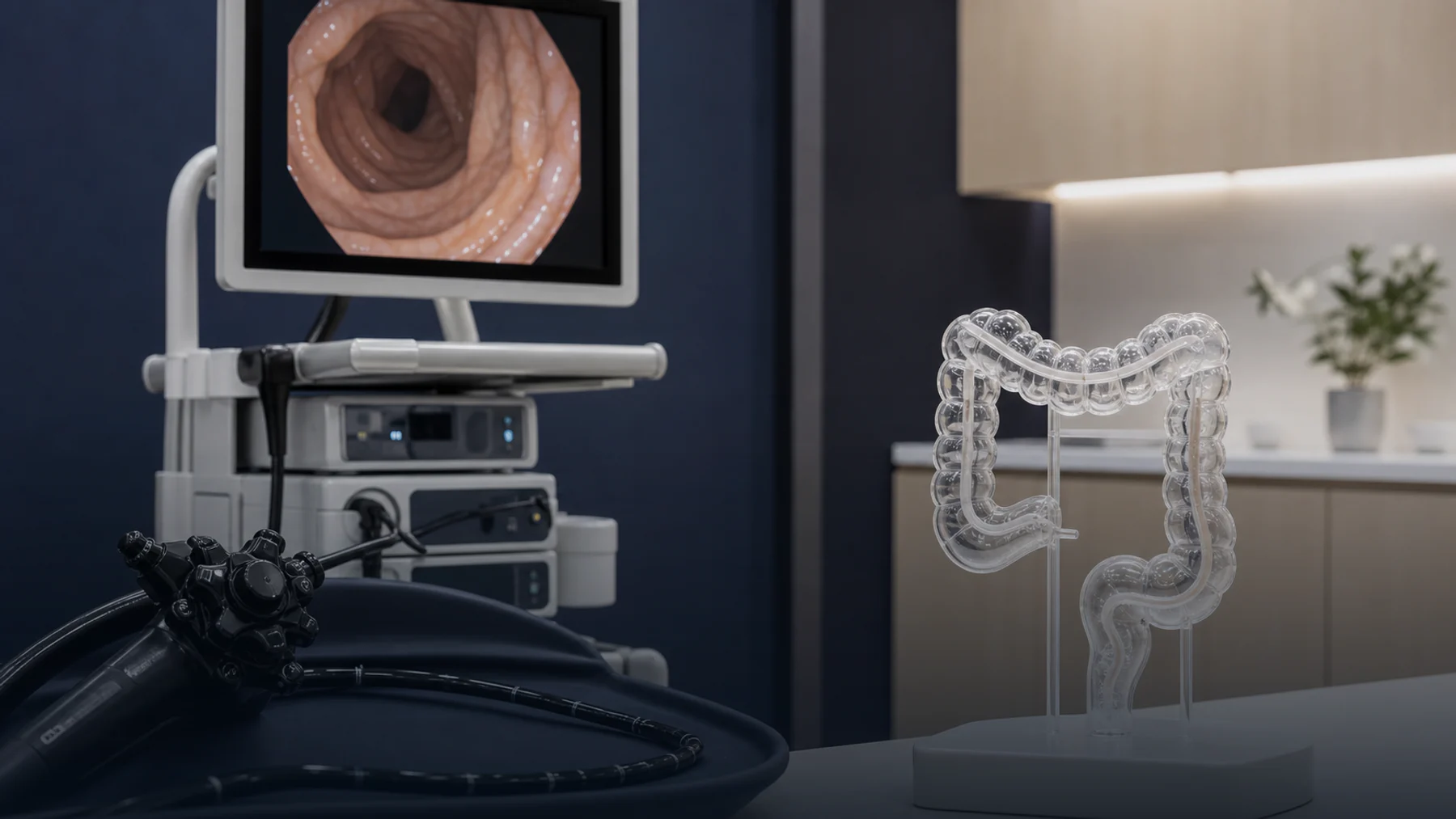
A whole-body MRI does not reliably detect lung nodules under 5mm or early colonic lesions; a low-dose chest CT and a colonoscopy remain the appropriate tests for those.
Suits: Adults without acute symptoms who want a broad structural baseline: the population this screening program is built for.
Should not have it: People with certain metal implants or pacemakers, significant claustrophobia, or reduced kidney function that limits contrast-agent use. Tell your coordinator before you book so the protocol can be adjusted or an alternative arranged.
A low-dose chest CT is faster, uses a small radiation dose, and is the more sensitive test specifically for small lung nodules. An MRI has no radiation but runs longer and is not the right tool for early lung or colon findings. See "what it does not find" above.
This is not itemised on any of the tiers on this site: their published MRI option (Advanced tier) is by region — brain, cervical or lumbar — not a whole-body protocol. A whole-body scan can be arranged as an addition; confirm availability and price with your coordinator before booking on the strength of this page alone.