Tests · Low-dose chest CT

The lung-cancer screening test.
Ten minutes, minimal dose.

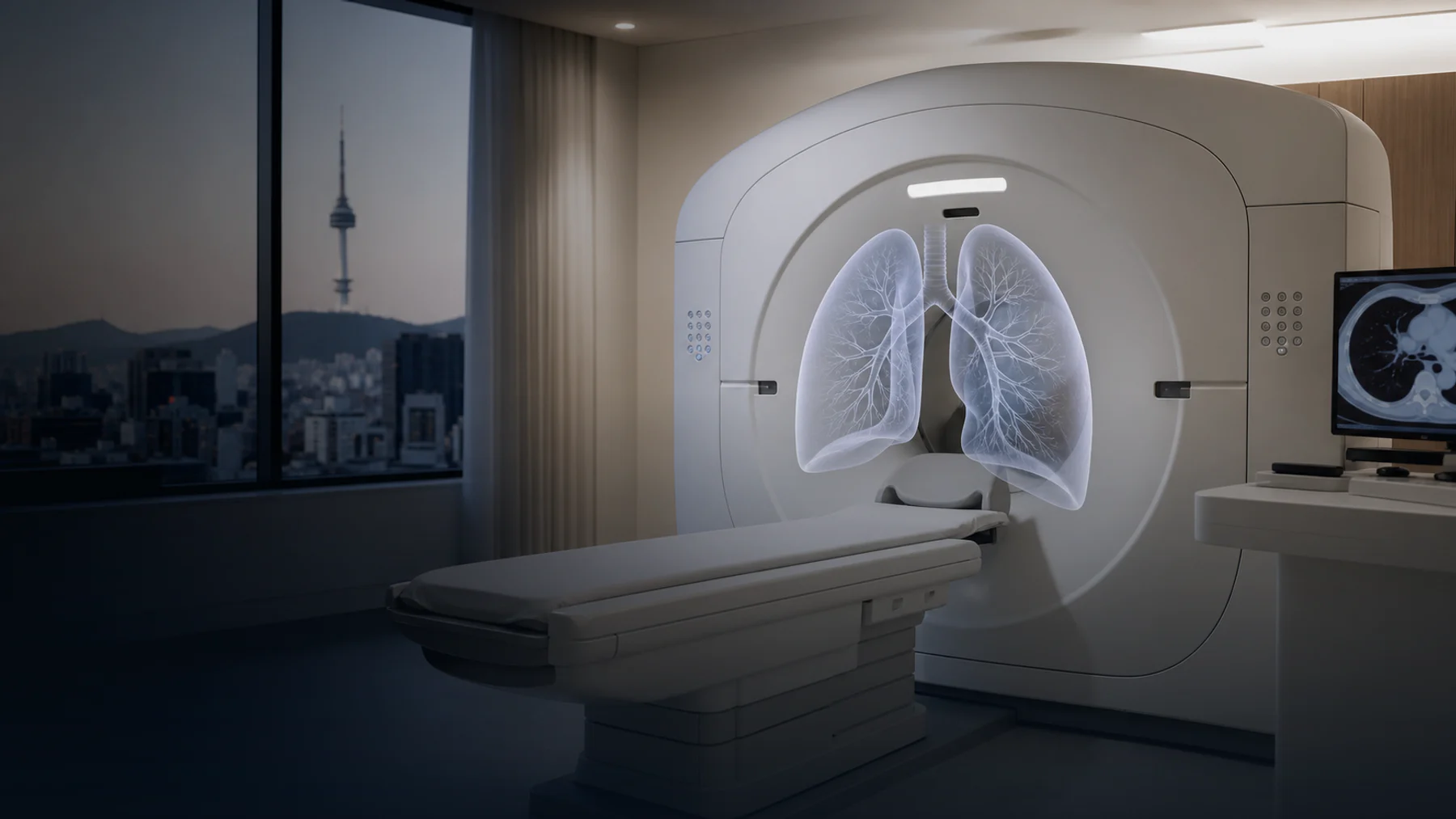
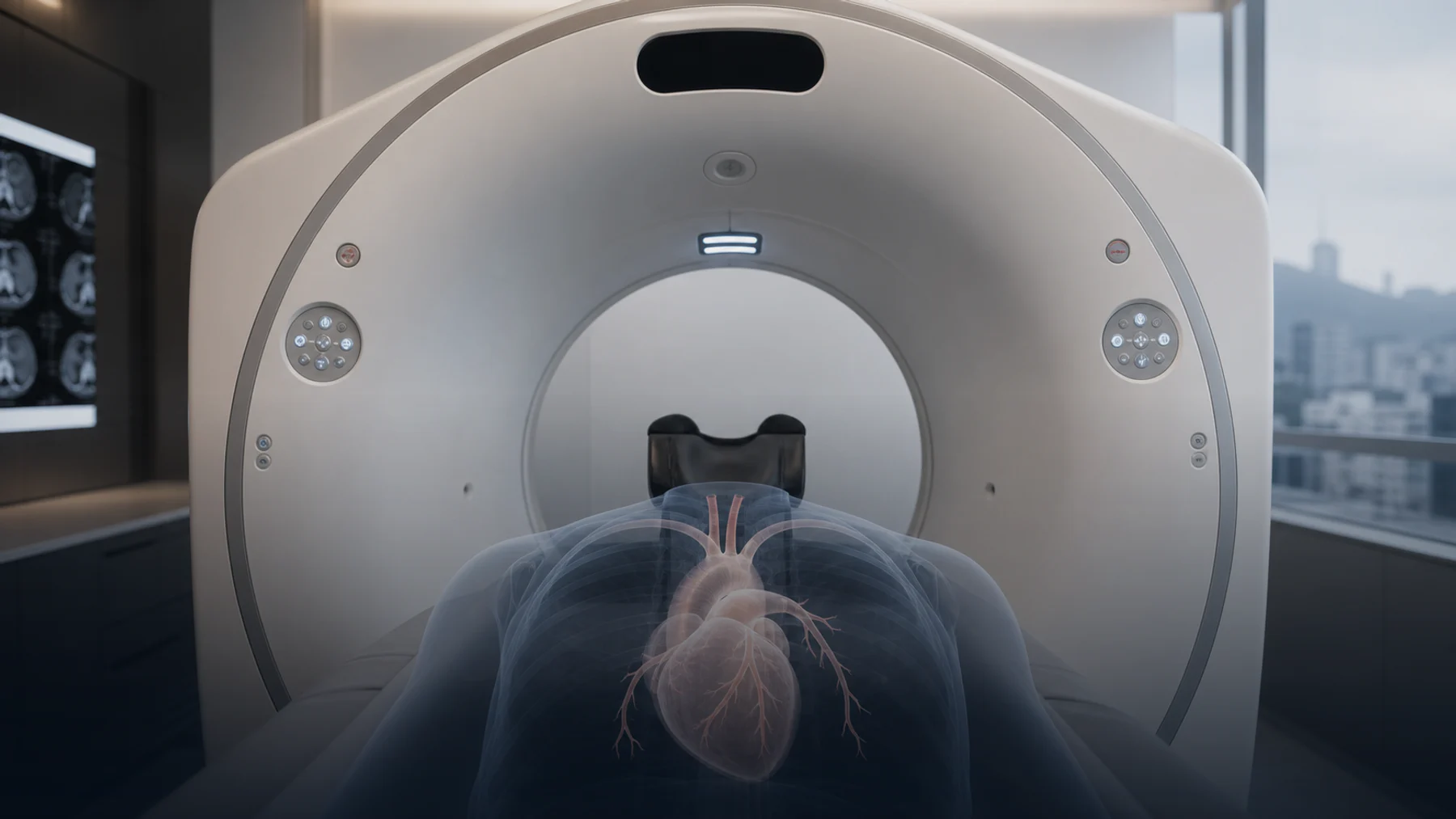
A low-dose chest CT is a rapid CT scan of the lungs, optimised to find small nodules at a fraction of a standard CT's radiation dose. It is the recommended screening test for lung cancer in current and former heavy smokers, and a common add-on for anyone screening the chest.
10–15 min
Scan time

A single breath-hold acquisition.

1–1.5 mSv
Radiation dose

A fraction of a standard-dose chest CT.

₩130,000
Standalone price

A partner centre's published non-covered price for a chest and rib CT.

₩500,000
Cheapest program including it

Medione A. Basic Health Checkup, the cheapest programme carrying the low-dose chest CT outright. (≈$373)

From 1 wk
Earliest slot

One week is the earliest an imaging slot can be held, and there is no referral step before it.

1–3 wk
Full written report

English report in your hands in two weeks on average, one week at the soonest and three at the latest. You also get a consultation on preliminary findings on the day of the screening, before you leave.

Programme contents and prices from each partner centre's own foreigner-facing published list, read 2026-08-05: KMI Global and Hanaro Medical Foundation's English site. Standalone per-test prices are a Korean partner centre's 비급여 (non-covered) posting, the itemised list 의료법 제45조 requires a clinic to publish, read the same day. Scheduling and report turnaround confirmed 2026-08-06 and 2026-10-14 respectively (https://global.kmi.or.kr/examination/foreigner_examination; https://en-mobile.hanaromf.com/program/prog01/prog01_01.jsp), measured 2026-08-05. Dollar figures are converted from each centre's won price at ₩1,342 = $1 (open.er-api.com, 2026-09-13). The won figure is the price; the pairing moves with the rate.

What it finds, and what it does not

What it finds, and what it does not.

Lung nodules, including small ones a whole-body MRI would miss, and other structural findings in the chest.

A low-dose chest CT does not evaluate the heart, abdomen or pelvis, and a nodule it finds is not automatically cancer. Most small nodules are not; the report sets out a follow-up interval rather than a diagnosis.

Suitability

Who it suits, and who should not have it.

Suits: Current and former heavy smokers, and anyone who wants dedicated lung screening alongside a broader work-up.

Should not have it: People who are pregnant. Tell your coordinator if you are or may be pregnant so the protocol can be adjusted.

In context

How it differs from the related test.

A whole-body MRI covers far more ground but is not sensitive to small lung nodules; a low-dose CT is the narrower, purpose-built test for exactly that.

Which tier includes it

Included from Essential.

Every Medione checkup programme includes a low-dose chest CT outright, starting in the Essential band. Its two whole-body MRI programmes are the exception, and carry no chest CT. Severance includes one from Premium upward. At KMI and Hanaro a lung CT is an option rather than a fixture. KMI's NOBLE lists one among the tests you choose from, Hanaro's Silver and Gold list one among their CT choices, and Hanaro also sells a low-dose lung CT as an add-on. See /pricing/, or Medione's B-5. Precision - Respiratory Checkup for a chest work-up on its own.

SEE THE FULL TIER LADDER
Related tests

Often booked together.

Whole-body MRI

One scan. Head to torso, no radiation.

Coronary calcium score

A five-minute scan. A number your cardiologist already knows how to use.

FAQ

Questions worth asking before you book.

Who should get a low-dose chest CT?
It is most strongly recommended for current and former heavy smokers, following published lung-cancer screening criteria; anyone can add it to a broader screening program.
Is the radiation dose safe?
The dose is a small fraction of a standard chest CT, low enough that annual screening is the recommended protocol for the highest-risk group.
What happens if a nodule is found?
Most small nodules are not cancer. The report states a size, and a recommended follow-up interval or further test. Your own doctor decides next steps with that report in hand.