Tests · Bone densitometry

Two minutes,
and a number you keep for life.

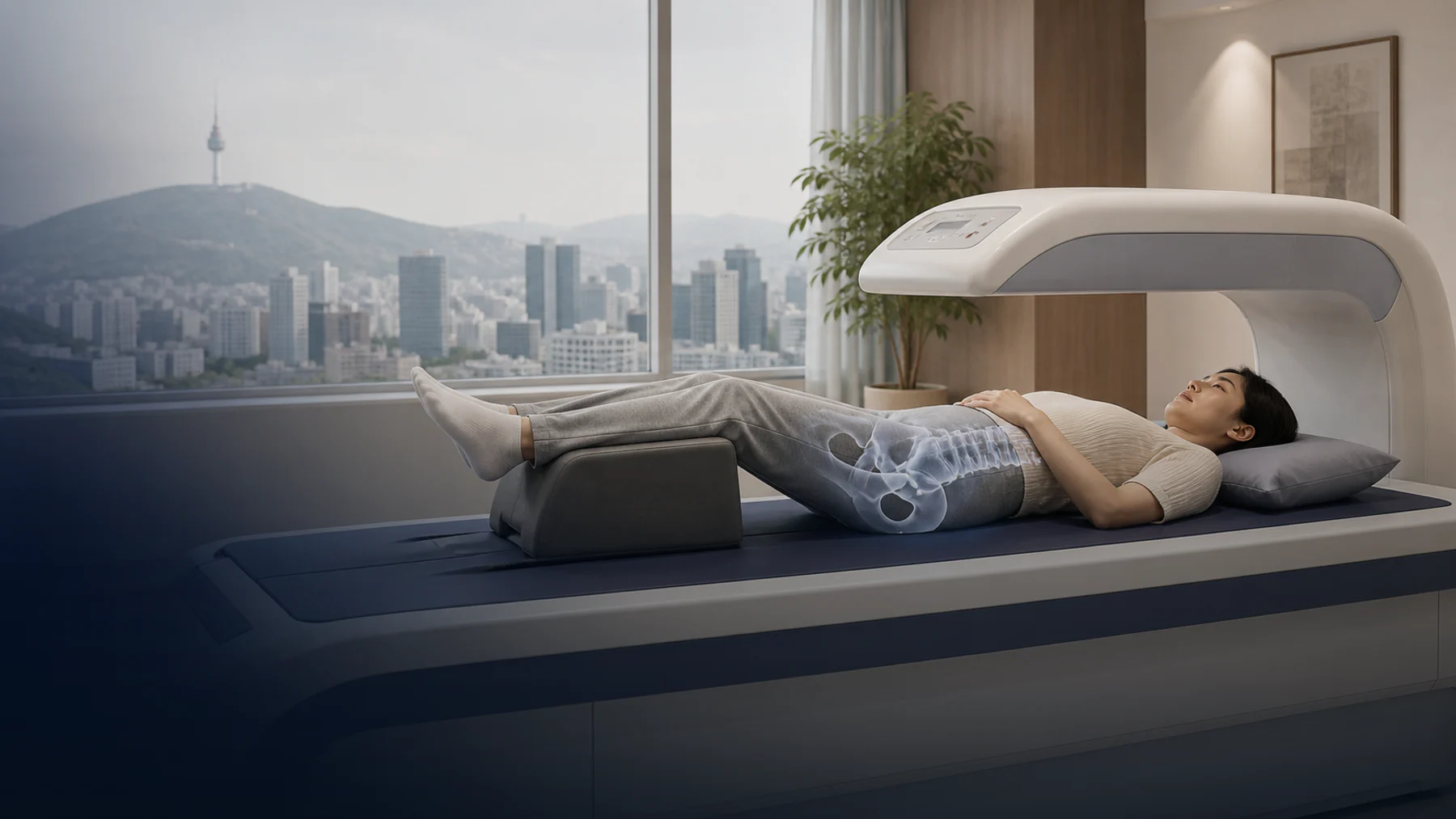
A DEXA scan measures bone mineral density at the spine and hip and returns a T-score, which is the number osteoporosis is defined by. The dose is a fraction of a chest X-ray, and the value of the first one is that every later scan is measured against it.
2 min
Scan time

Lying still on a table, fully clothed.

<0.01 mSv
Radiation dose

A small fraction of a chest X-ray.

$316
Cheapest program including it

Hanaro's Basic program, men's price, ≈₩450,000, the cheapest program on this site that includes a DEXA scan at all.

$1,404
KMI Global's entry point for it

Noble, ≈₩2,000,000. KMI's Standard and Signature do not include bone densitometry.

From 1 wk
Earliest slot

One week is the earliest an imaging slot can be held, and there is no referral step before it.

~1 wk
Full written report

English report in your hands in about a week. You also get a consultation on preliminary findings on the day of the screening, before you leave.

Programme contents and prices from each partner centre's own foreigner-facing published list, read 2026-08-05: KMI Global, Hanaro Medical Foundation's English site and MediOne's English site. Standalone per-test prices are MediOne's 비급여 (non-covered) posting, the itemised list 의료법 제45조 requires a clinic to publish, read the same day. Scheduling and report turnaround are Meridiko's own operating figures, confirmed 2026-08-06, not a centre's published ones (https://global.kmi.or.kr/examination/foreigner_examination; https://en-mobile.hanaromf.com/program/prog01/prog01_01.jsp; https://en.medionemedicalcenter.com/m1; https://medionemedicalcenter.com/115), measured 2026-08-05.

What it finds, and what it does not

What it finds, and what it does not.

Bone mineral density at the lumbar spine and hip, reported as a T-score against a young-adult reference. It is how osteopenia and osteoporosis are diagnosed, and it is the baseline every future scan is compared with.

It does not find fractures, and a normal T-score does not mean a bone cannot break. It also says nothing about why density is low, which is a blood work-up.

Suitability

Who it suits, and who should not have it.

Suits: Women after menopause, men over 65, anyone on long-term steroids, anyone with a parent who fractured a hip, and anyone thin or with a history of low body weight. Also anyone who wants a baseline while it is still cheap to establish one.

Should not have it: Nobody on safety grounds. It is the lowest-dose imaging test in any program. Pregnancy is the exception, as with any X-ray-based scan.

In context

How it differs from the related test.

A DEXA scan measures density; an X-ray finds a break. They are not substitutes, and the reason DEXA exists is that bone can lose a third of its density with nothing visible on a plain film.

Which tier includes it

Included from Essential.

Included from the Essential tier on this site, because Hanaro's Basic program carries it. Note the asymmetry worth checking: KMI Global's foreigner-facing Standard and Signature do not include bone densitometry, and its Noble program is where it starts.

SEE THE FULL TIER LADDER
Related tests

Often booked together.

Full blood panel

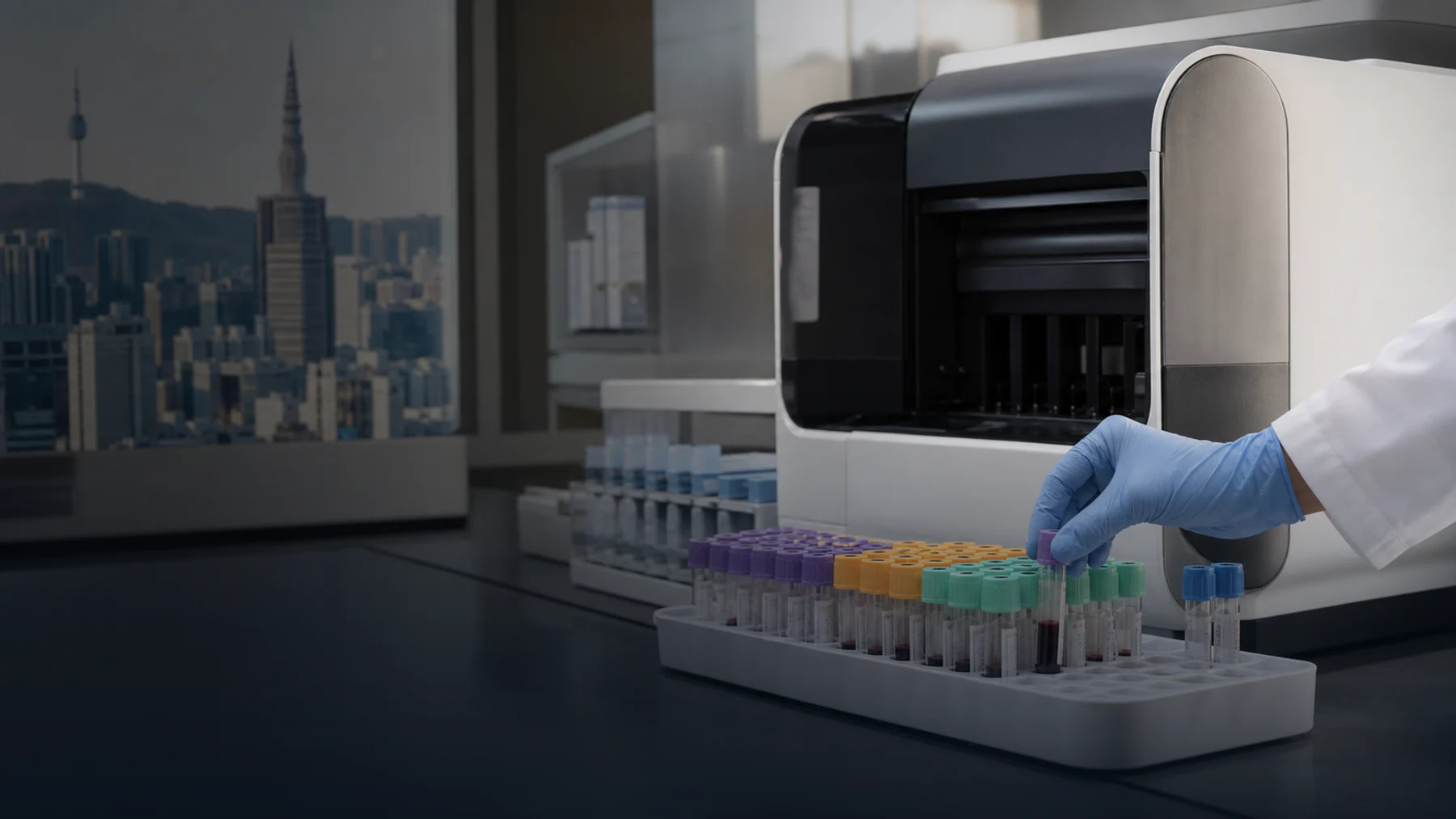
The baseline every program includes. Because the scans need context.

Whole-body MRI

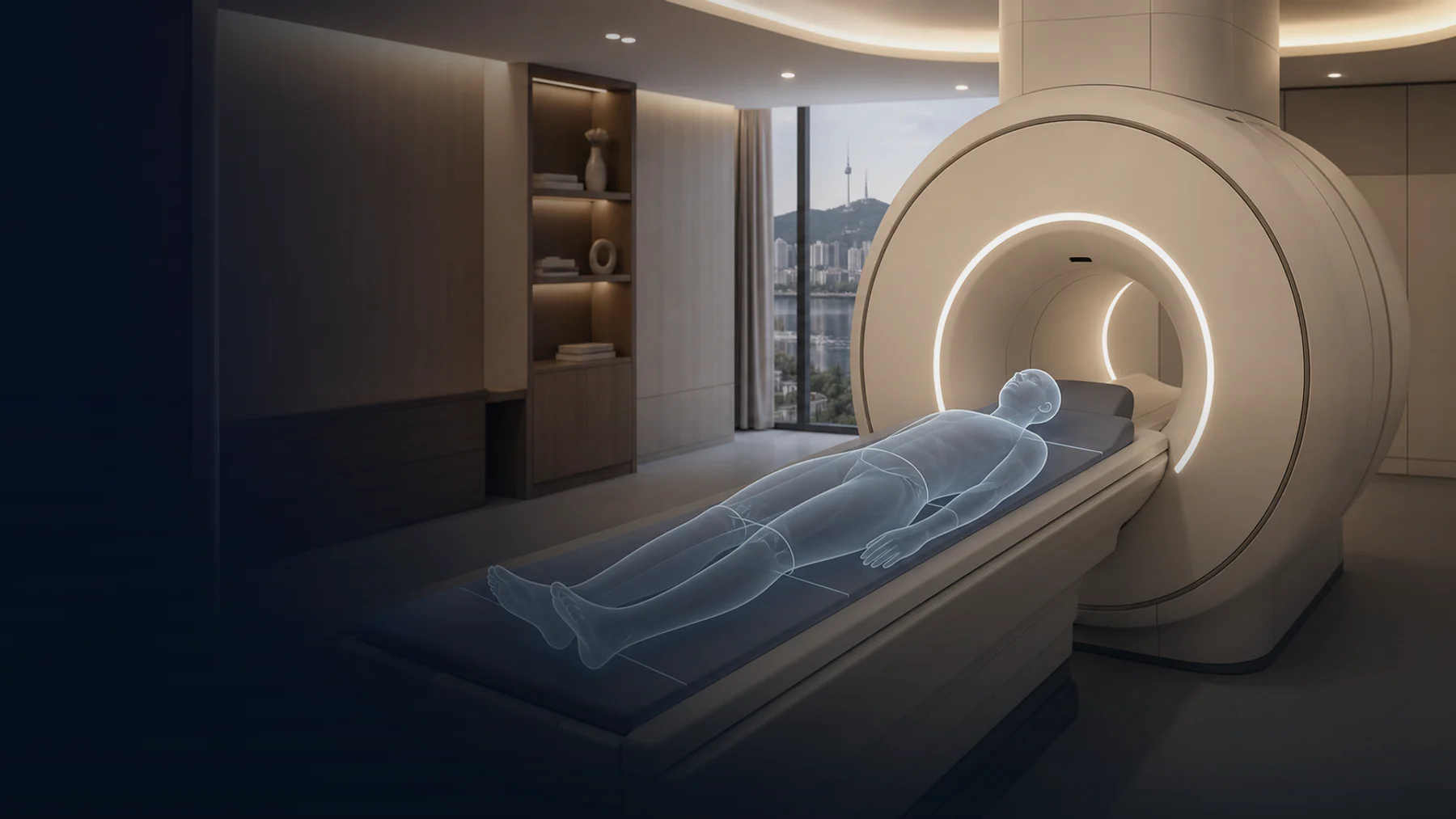
One scan. Five regions, no radiation.

FAQ

Questions worth asking before you book.

How often should it be repeated?
That depends on the first result and on your risk factors, and it is a conversation for the doctor reading it rather than a fixed interval this page can give you. The first scan is what makes the question answerable.
Is the radiation a concern?
No. A DEXA scan is well under a hundredth of a millisievert, which is a fraction of a chest X-ray and a small fraction of a day's background exposure.