Tests · Cardiac CT angiography

The arteries
themselves, mapped.

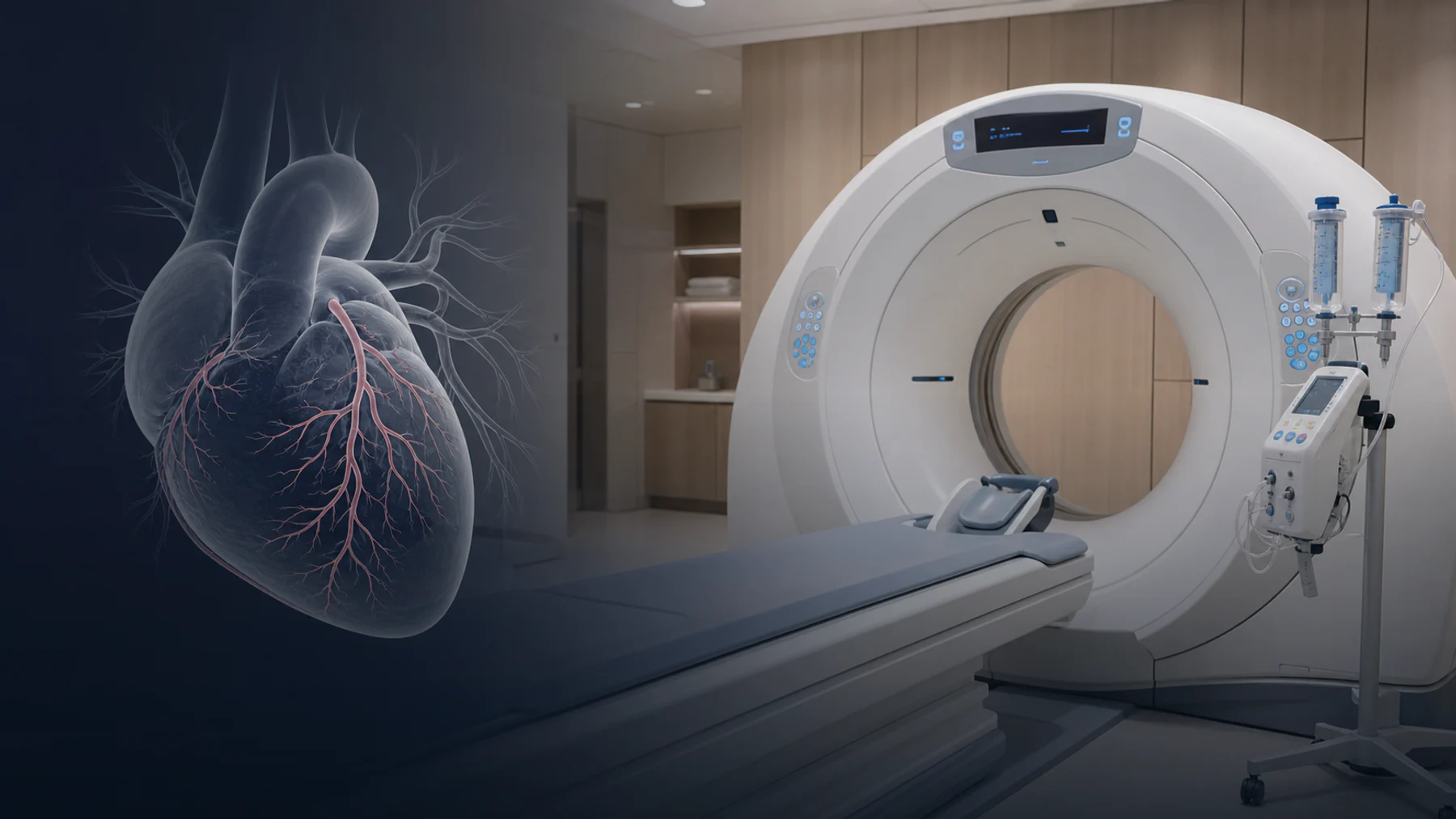
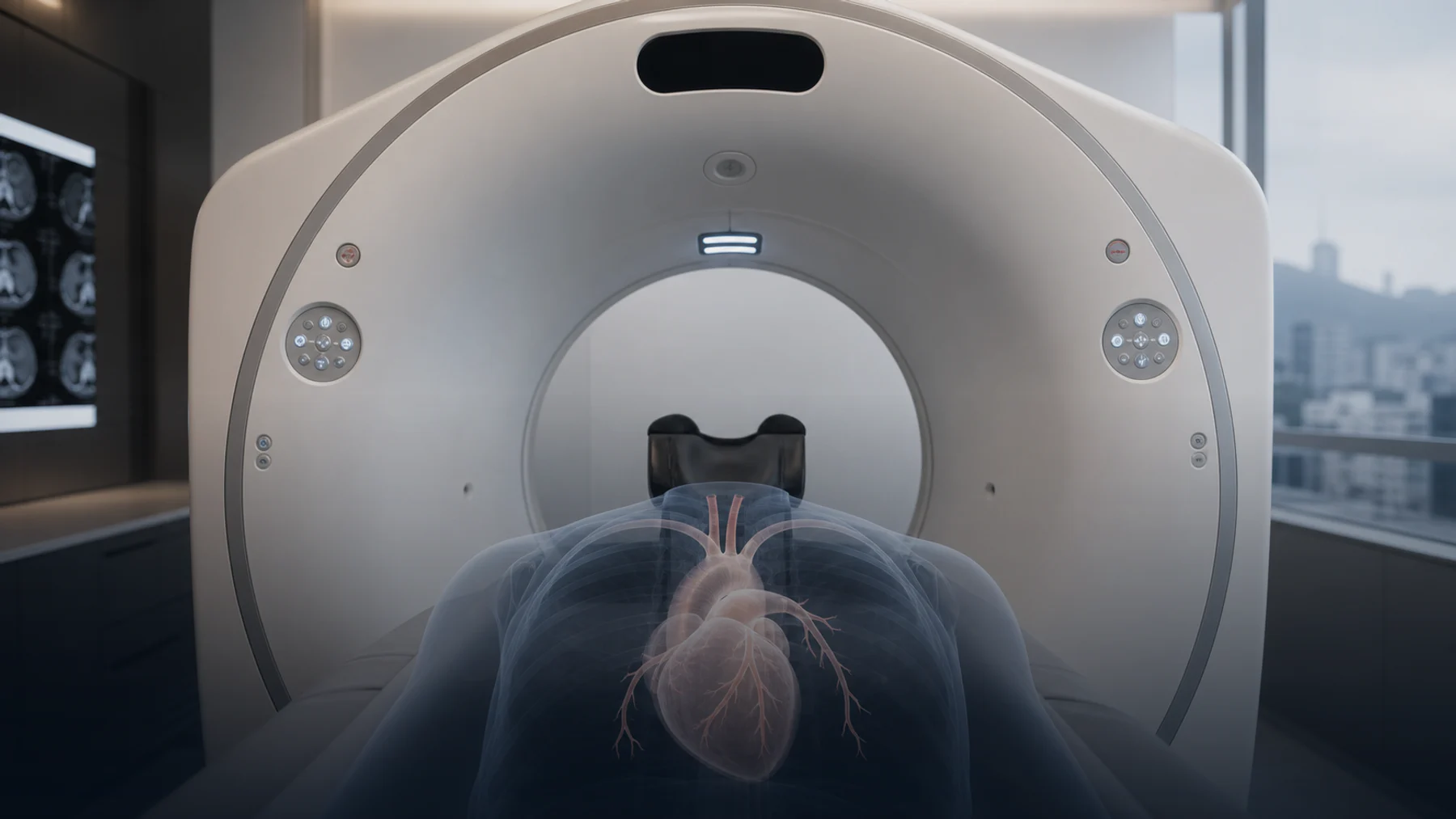
A cardiac CT angiogram uses contrast and a fast CT to image the coronary arteries directly, showing narrowing rather than estimating risk from calcium alone. It is the step up from a calcium score, and the partner centres price it as such.
10–15 min
Scan time

Includes a contrast injection and breath holds.

3–7 mSv
Radiation dose

Higher than a calcium score, which is about 1 mSv, and lower than an invasive angiogram.

$197
Standalone price

MediOne's published non-covered price for a 3D cardiac-vessel CT with contrast, ≈₩280,000.

$632
Cheapest program including it

MediOne's Heart program, ≈₩900,000, which lists 3D coronary CT angiography with a carotid ultrasound.

From 1 wk
Earliest slot

One week is the earliest an imaging slot can be held, and there is no referral step before it.

~1 wk
Full written report

English report in your hands in about a week. You also get a consultation on preliminary findings on the day of the screening, before you leave.

Programme contents and prices from each partner centre's own foreigner-facing published list, read 2026-08-05: KMI Global, Hanaro Medical Foundation's English site and MediOne's English site. Standalone per-test prices are MediOne's 비급여 (non-covered) posting, the itemised list 의료법 제45조 requires a clinic to publish, read the same day. Scheduling and report turnaround are Meridiko's own operating figures, confirmed 2026-08-06, not a centre's published ones (https://global.kmi.or.kr/examination/foreigner_examination; https://en-mobile.hanaromf.com/program/prog01/prog01_01.jsp; https://en.medionemedicalcenter.com/m1; https://medionemedicalcenter.com/115), measured 2026-08-05.

What it finds, and what it does not

What it finds, and what it does not.

The coronary arteries themselves: where plaque sits, how much narrowing it causes, and anatomical variants. It sees non-calcified plaque a calcium score is blind to.

It does not measure whether a narrowing is actually limiting blood flow, which is a functional question answered by stress testing or invasive measurement. It also carries a contrast load and a real radiation dose, so it is not a casual add-on.

Suitability

Who it suits, and who should not have it.

Suits: Adults with an intermediate or high calcium score, chest pain under investigation, or a strong family history who want the arteries mapped rather than scored.

Should not have it: People with significant kidney impairment or a contrast allergy, because of the contrast. Anyone with a zero calcium score and no symptoms, for whom the extra dose usually buys little.

In context

How it differs from the related test.

A calcium score is a cheap, low-dose number. This is a map. Start with the score unless there is a reason not to, and escalate to the angiogram if the score or the symptoms warrant it. MediOne prices both, which makes the escalation a decision rather than a package.

Which tier includes it

Not itemised on any tier.

Not itemised on the three tiers this site prices. MediOne includes it in its Heart program at ≈₩900,000 and prices it standalone at ≈₩280,000; Hanaro's Gold program includes a cardiac calcium score rather than an angiogram. Confirm which of the two your program actually contains.

SEE THE FULL TIER LADDER
Related tests

Often booked together.

Coronary calcium score

A five-minute scan. A number your cardiologist already knows how to use.

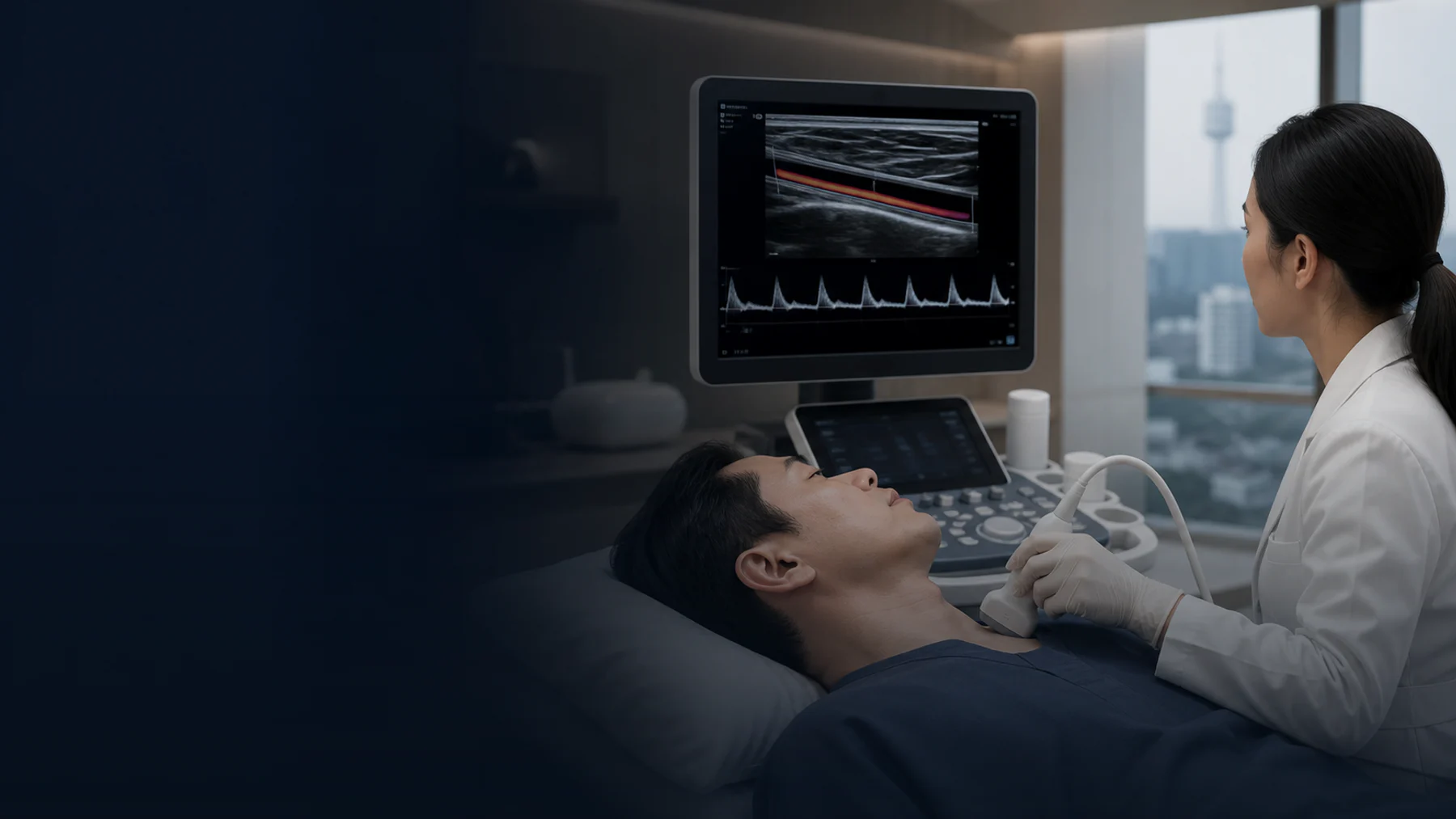
Carotid ultrasound

The arteries that feed your brain.

FAQ

Questions worth asking before you book.

Is this the same as a stent procedure?
No. This is a CT scan through an intravenous line. An invasive coronary angiogram threads a catheter to the heart and is a procedure, not a scan.
Why is the dose higher than a calcium score?
Because it images the vessel lumen through a contrast bolus across the cardiac cycle, which takes more of the scan than a calcium measurement does.